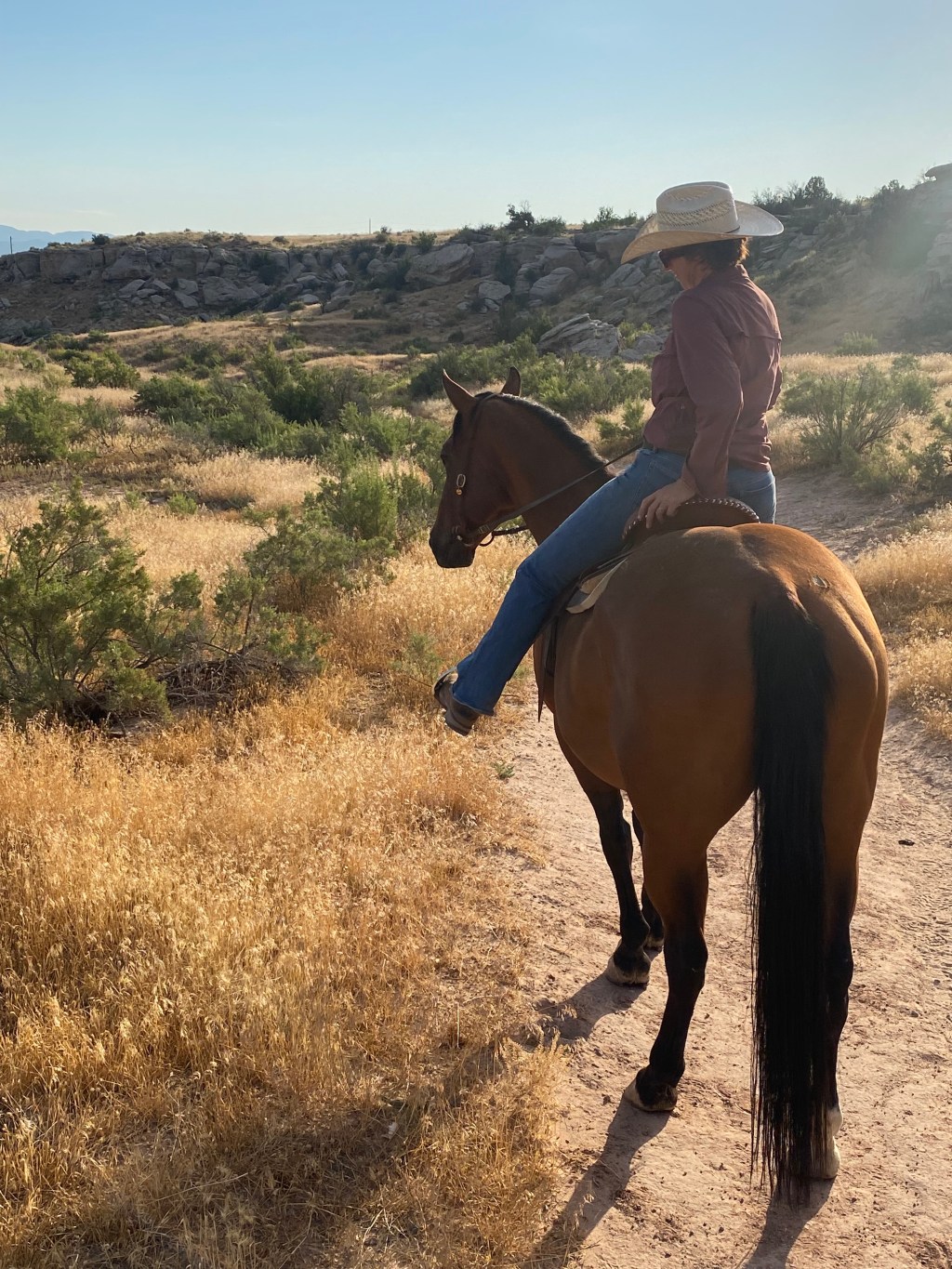
When teaching new riders, I often liken riding your horse to giving someone a piggyback ride.
If they turn their head, you’re gonna feel it. Just like your horse will know where you’re looking.
If they’re tense, you’re gonna feel it. And as my son reminds me often – when you ride, you’ve given some control of your well-being to a prey animal. My job as an instructor is to help people find relaxation when their body wants to jump into flight mode.
If you shift your body one way or the other, your horse is going to feel it.
If you want a horse who stops with a simple voice command and who turns with a shift of your seat, you have to always be mindful of how you’re positioned on your horse. What you say. How you say it.
You need to sit balanced, but not tight. Strong while still moving with the gaits.
Always give your horse a chance to follow a light command before getting your hands or heels involved. As you lighten, they’ll lighten.
As you listen more, they’ll listen more.
And for anyone who had held a floppy, sleeping toddler…we all know they weight about 10 times as much as one who’s awake.
The grade of cues we give are ASK, TELL, DEMAND. So, we always start small and simple, hoping our horse will follow. Whether we like it or not, every time we interact with a horse, we’re training that horse. We’re teaching them what to expect from us, and they’ll (usually) respond accordingly.
Our hope is always to help riders find a common language with the particular horse they work with the most, and find ways to foster that connection. The rides that look the smoothest and easiest, are often the rides that took a long time to get to that place. A lot of listening, experimentation, and patience. And so much walking. So much.
Stay awake. Stay alert. And for the love…enjoy the ride.
~ Jolene

 Compass Line Equestrian LLC
Leave a comment