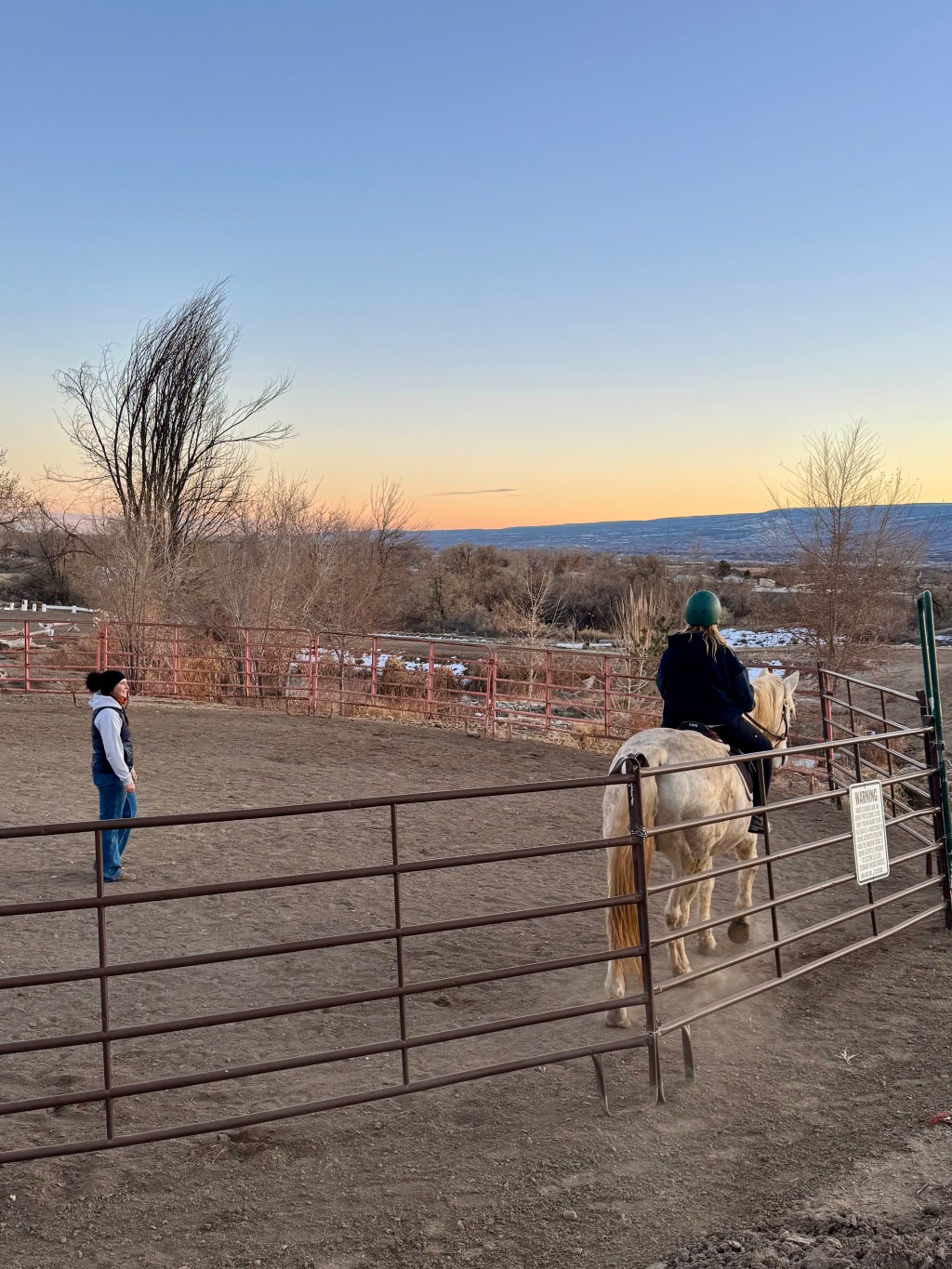
Some students love moving up slowly and other students want to push past their current capabilities. Here’s the criteria that we use moving students up through a horse’s gaits.
Remember that newer riders will make being ridden a little uncomfortable for horses. We have to learn to post softly – to not land hard on the horse’s back. We need good balance to not bump a horse’s mouth. So, while some of the guidelines are for rider safety, they’re also very much for the horse’s well-being. When you’re feeling anxious and want to jump ahead, remember we’re watching out not just for you but also for the horse.
To trot on the lead/lunge, rider must be able to rise/post at a walk without support from the saddle, a strap, or the horse’s mane.
To trot in the round pen, rider must be able to trot on the lead/lunge without support.
To hold the reins on the lunge, rider needs to be able to sit and post the trot without holding the saddle or other support.
To trot off the lunge and round pen, rider needs to be able to trot while holding reins without tugging the horse’s mouth or holding the saddle or other support.
To canter in the round pen or on the lunge, rider needs to be able to sit, 2 point, or post at the trot without a hand support and without bumping the horse’s mouth or back while moving between these seat positions at a walk and trot.
To canter in the arena, rider must demonstrate many walk, trot, whoa combinations while in all seat positions (sitting, rising, 2 point) without needing support for balance and while keeping hands steady.
To move from the lunge, round pen, or leadline, rider must show solid control of their horse–unexpected turns, expected turns, as well as many stops.
Contrary to most trail riding companies and other people who give lessons, I beileve that students should be at an independent walk, trot, canter in the arena level before doing a trail ride. I want my students to be prepared if the unexpected happens, and part of that is being comfortable in all gaits.
(This is why I often sneak in a TEENY bit of canter before students have perfectly mastered the levels above. I want them to have an idea of what it feels like, so they can manage a bit better if a horse unexpectedly finds a canter)
What I wish I could tell every student is the following:
Even pros take lessons. Even pros need and want lunge lessons. Those of us who have spent decades in the horse world have heard stories of olympic-level riders taking a week or two every year to ride on a lunge line without sitrrups and with the guide of a person on the ground. Most professionals understand the importance of beginning each new movement at the walk. Of spending time without stirrups, time with someone on the ground watching them ride, and always always, taking time for the basics.
~ Jolene
 Compass Line Equestrian LLC
Leave a comment